

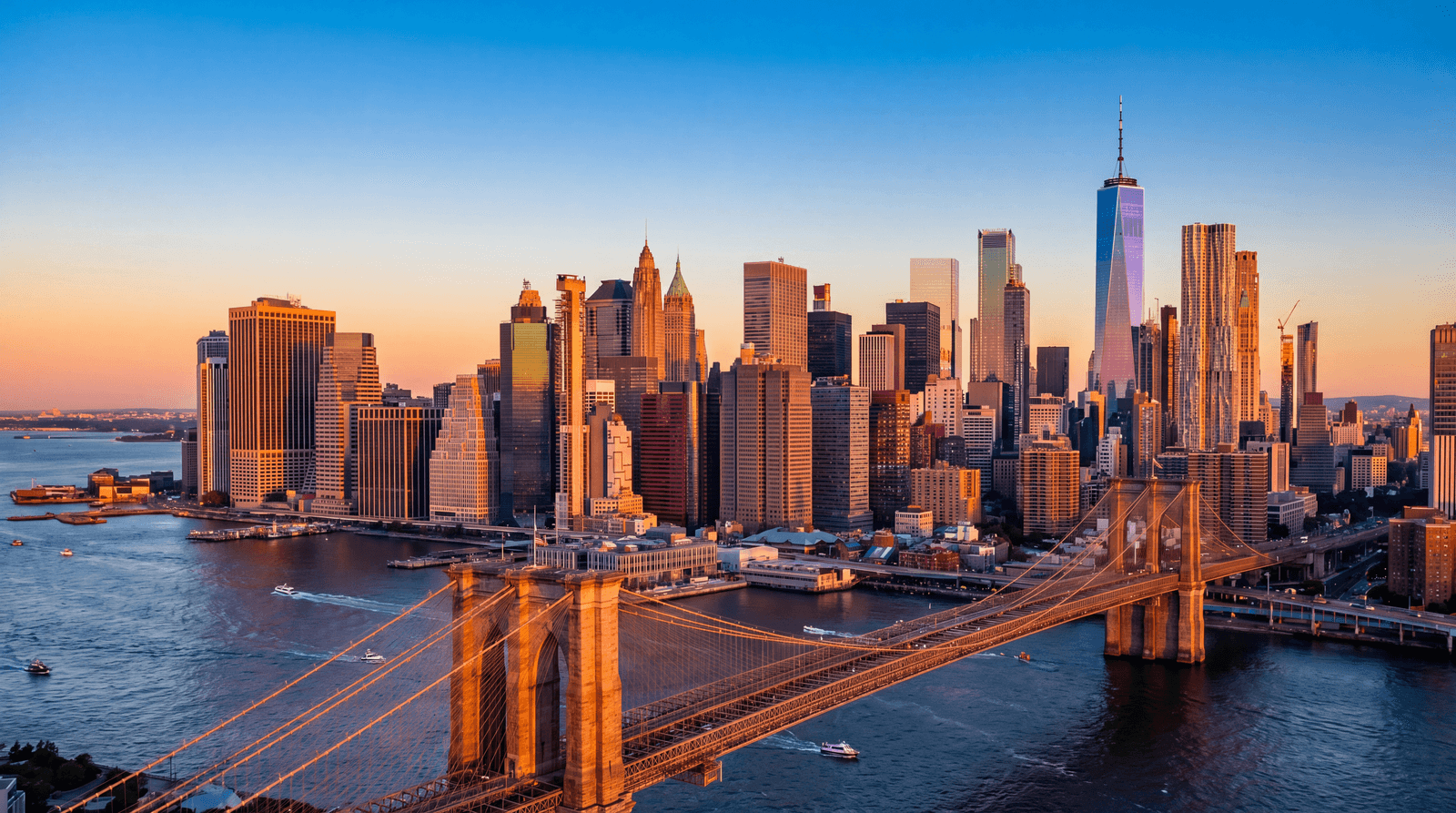
New York City is not one market. It is five boroughs, dozens of micro-neighborhoods, and over 8 million people who are exposed to an estimated 6,000 to 10,000 ads per day. Digital channels get most of the budget conversation, but the brands that win in NYC know something the rest are still figuring out: traditional marketing, done with local precision, delivers results that digital alone cannot replicate.
This guide breaks down the offline strategies that actually move the needle in New York, with specific tactics for reaching audiences in Manhattan, Brooklyn, Queens, the Bronx, and Staten Island.
Why Traditional Marketing Still Matters in NYC
The average New Yorker spends over 80 minutes per day commuting. That is 80 minutes where they are not scrolling their phone (subway tunnels still have dead zones), but they are staring at subway posters, bus wraps, and station takeovers. Traditional channels reach people in moments that digital simply cannot.
Beyond commute time, there are structural reasons traditional works here:
- Ad fatigue is real. New Yorkers are among the most digitally saturated consumers in the country. A physical ad in an unexpected place cuts through in a way that another Instagram story does not.
- Local trust matters. A billboard on Atlantic Avenue or a poster in a bodega signals that a brand actually knows the neighborhood. That local credibility is hard to manufacture online.
- Multi-channel compounds. Nielsen research shows that OOH advertising increases the effectiveness of digital campaigns by up to 40% when run together.
MTA Advertising: NYC’s Most Underrated Channel
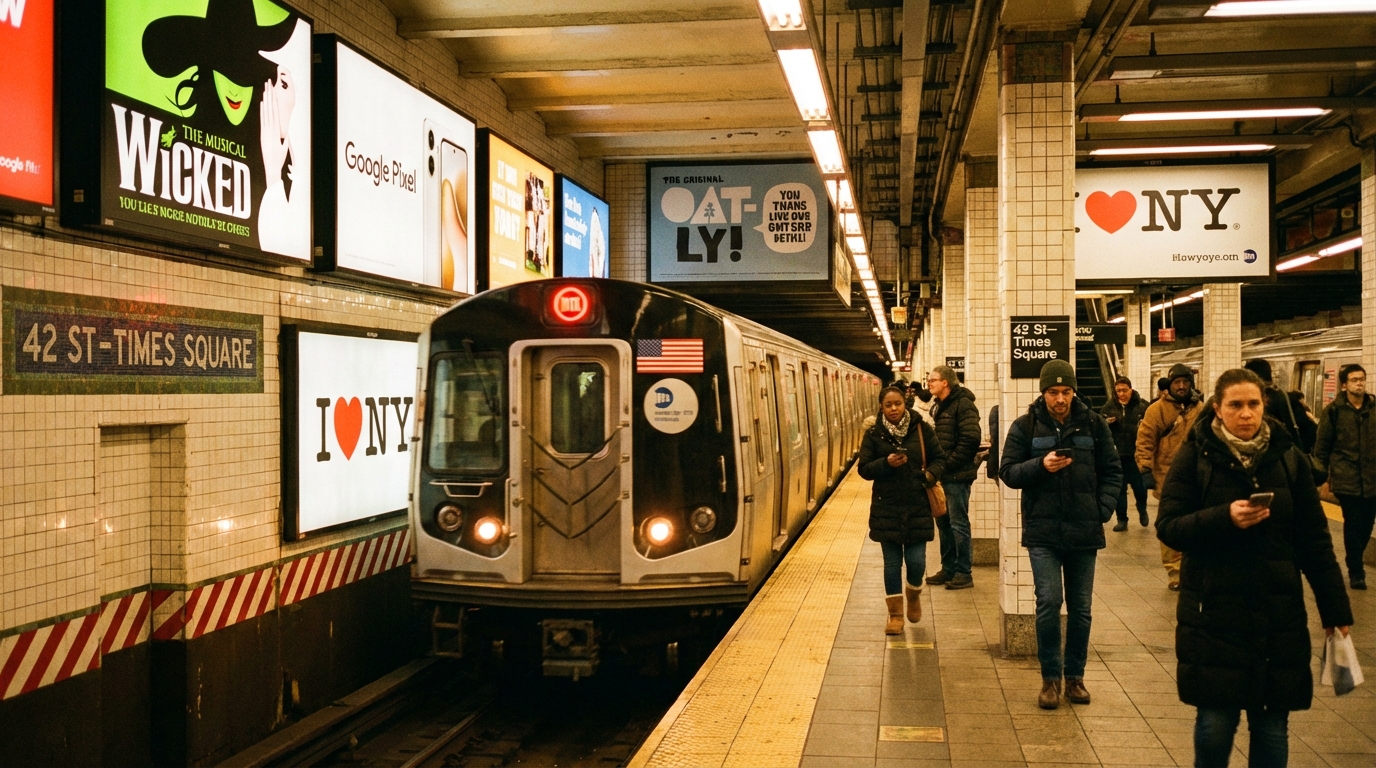
The Metropolitan Transportation Authority moves approximately 5.6 million riders per weekday across its subway and bus systems. MTA advertising is not just another OOH option; it is the backbone of traditional marketing in New York City.
Subway Advertising
The subway system reaches every borough and every demographic. Here is what makes it powerful:
- Station dominations let you take over an entire station with your brand. High-traffic hubs like Times Square-42nd St, Union Square, Atlantic Avenue-Barclays Center, and Flushing-Main Street give you borough-specific saturation.
- In-car ads (the panels above seats and next to doors) get extended dwell time. The average subway ride is 35 minutes, and riders have limited alternatives for their attention.
- Digital screens on newer platforms (like the Second Avenue line) offer dynamic creative that can rotate by time of day, letting you run a morning coffee ad at 7 AM and a happy hour promotion at 5 PM.
- Platform posters (two-sheets and king-size) are visible from across the platform and impossible to scroll past.
Bus Advertising
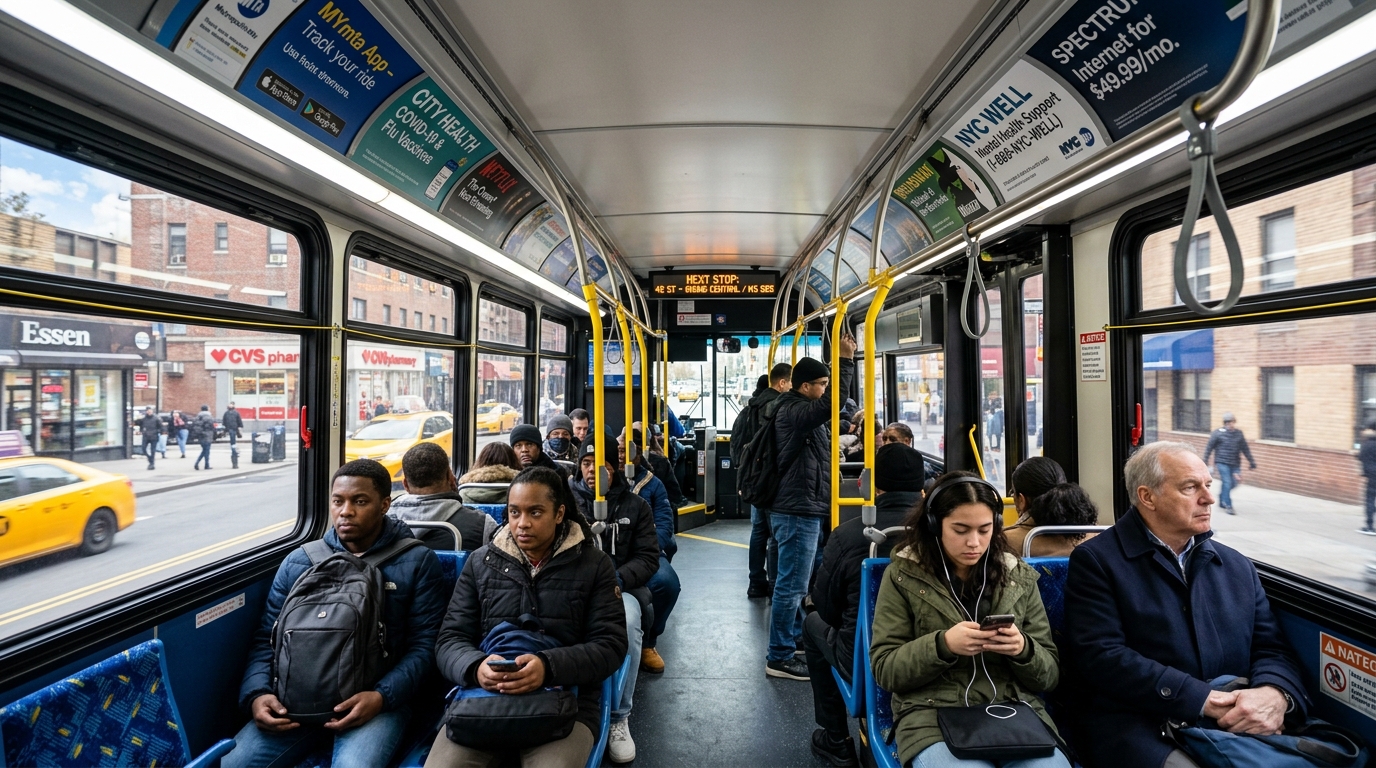
MTA buses cover routes that the subway does not, particularly in eastern Brooklyn, Queens, the Bronx, and Staten Island. Bus wraps and interior cards reach commuters in neighborhoods where subway coverage is thinner, making them an excellent complement.
- Full bus wraps turn a moving vehicle into a mobile billboard that covers an entire borough route daily.
- Interior cards reach a captive audience during the average 25-minute bus ride.
- Bus shelter ads at stops along routes like the B44 (Flatbush Ave) or the Q70 (LaGuardia connector) reach both riders and pedestrians.
What MTA Advertising Costs
MTA ad rates vary widely depending on format and placement. A general range:
- In-car subway panels: $300-$800/month per car
- Station two-sheets: $1,500-$5,000/month depending on station traffic
- Station dominations: $50,000-$250,000+ for high-traffic hubs
- Bus wraps: $5,000-$15,000/month per bus
The CPM (cost per thousand impressions) for MTA advertising is often significantly lower than digital display, especially when you factor in the dwell time.
Billboards and OOH: Borough by Borough
Out-of-home advertising in NYC is not a one-size-fits-all play. Each borough has its own character, its own foot traffic patterns, and its own high-impact locations.
Manhattan
Manhattan is the obvious starting point, but it is also the most competitive. Beyond Times Square (which is effective but expensive), consider:
- Above Houston Street along Broadway and 6th Avenue for retail and DTC brands
- The West Side Highway corridor for automotive and luxury
- Lower East Side and East Village wallscapes for reaching younger demographics
- Penn Station and Grand Central interior placements for commuter-heavy audiences
Brooklyn
Brooklyn’s population (2.7 million) is larger than many American cities. Key OOH opportunities:
- The BQE corridor between Downtown Brooklyn and Williamsburg sees heavy vehicle traffic
- Flatbush Avenue from Barclays Center to Prospect Park is one of the borough’s busiest pedestrian corridors
- DUMBO underpasses and walls for tech, creative, and lifestyle brands
- Bushwick murals and wallscapes that blend advertising with the neighborhood’s street art culture
Queens
Queens is the most ethnically diverse urban area in the world, which makes localized, culturally relevant traditional marketing especially powerful:
- Roosevelt Avenue in Jackson Heights and Flushing for multilingual campaigns
- Astoria along Broadway and Steinway Street for restaurant, retail, and service businesses
- Long Island City waterfront and transit hubs for reaching the growing residential population
- JFK and LaGuardia Airport corridors for travel, hospitality, and B2B audiences
The Bronx
The Bronx market is often overlooked, which means less competition and lower rates:
- The Grand Concourse is a major north-south artery with high vehicle and foot traffic
- Fordham Road is one of the busiest shopping corridors in the city
- Yankee Stadium area during baseball season for event-driven campaigns
Staten Island
Staten Island has the highest car ownership rate in the city, which makes traditional OOH along the Staten Island Expressway and in commercial hubs like Hylan Boulevard particularly effective for auto, home services, and retail.
Street-Level and Hyperlocal Tactics
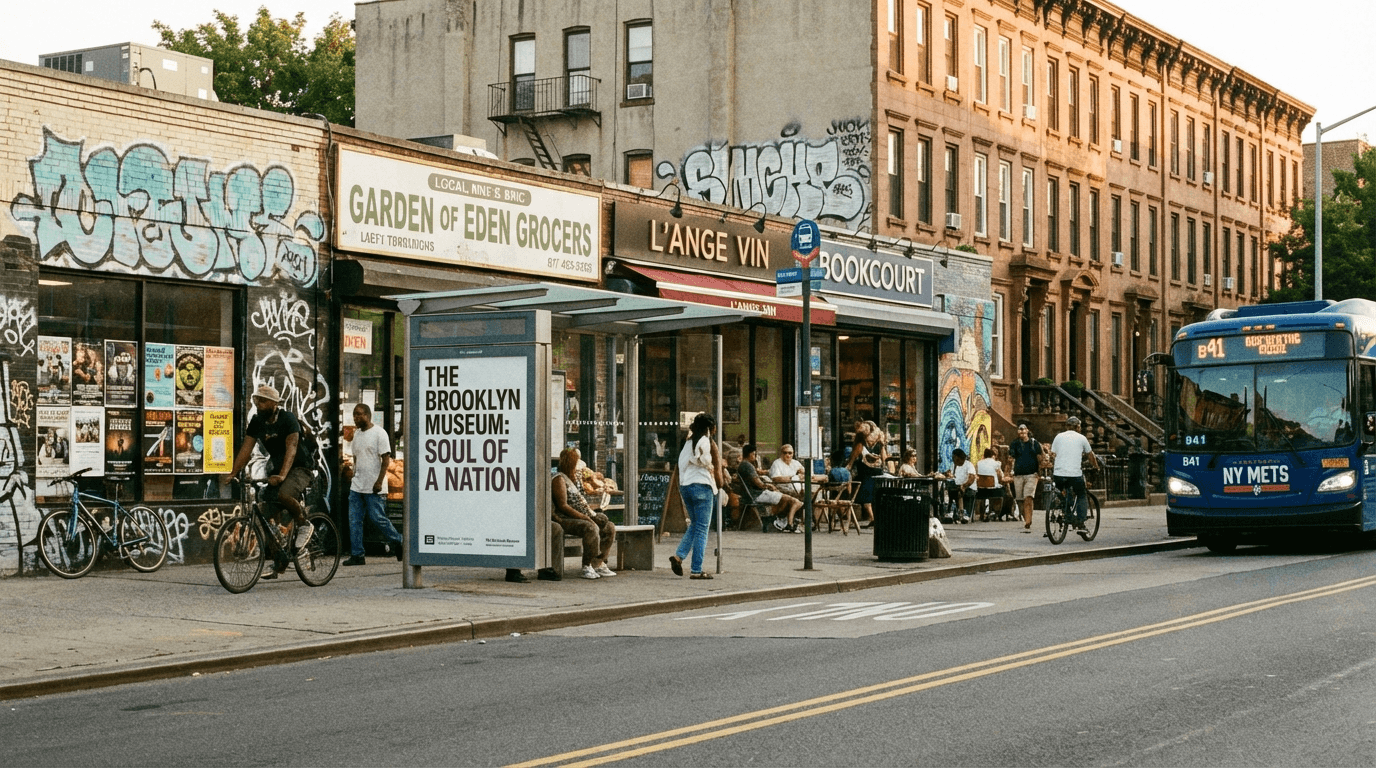
Not every traditional campaign needs a five-figure budget. Some of the most effective tactics in NYC operate at the neighborhood level.
Wild Posting
Wheat-pasting posters on construction scaffolding and hoarding is a New York tradition. It is especially effective in neighborhoods like Williamsburg, the Lower East Side, SoHo, and Bushwick where the street-level visual culture is part of the identity. Wild posting campaigns can be targeted to specific zip codes and run for as little as $2,000-$5,000 for a meaningful presence.
Bodega and Local Business Partnerships
There are over 13,000 bodegas in New York City. Placing branded materials, counter displays, or window ads in bodegas and local businesses puts your brand at eye level in the most hyperlocal context possible. This works exceptionally well for CPG brands, delivery services, and local service businesses.
Street Teams and Sampling
Handing out samples or promotional materials in high-traffic areas remains effective when done right. Key locations include:
- Union Square, Herald Square, and Columbus Circle in Manhattan
- Fulton Street Mall in Downtown Brooklyn
- Jamaica Center in Queens
The key is relevance: sampling iced coffee outside a subway exit on a July morning converts at a much higher rate than generic flyering.
Event Sponsorships
NYC’s event calendar is unmatched. Sponsoring or activating at local events creates in-person brand experiences:
- SummerStage concerts in Central Park and Prospect Park
- Smorgasburg food markets in Williamsburg and World Trade Center
- Street fairs across all five boroughs (there are over 300 per year)
- Cultural festivals in specific neighborhoods (Lunar New Year in Flushing, West Indian Day Parade on Eastern Parkway, San Gennaro in Little Italy)
These events are inherently borough-specific and culturally targeted.
Print That Still Works in NYC
Print is not dead in New York. Several publications maintain strong local readership:
- amNewYork Metro is distributed free at subway stations and has a daily readership of over 1.2 million
- The Village Voice (digital and print) still reaches arts and culture audiences
- Community newspapers like the Brooklyn Eagle, Queens Chronicle, Bronx Times, and Staten Island Advance have loyal local readership
- Neighborhood-specific magazines like Brooklyn Magazine or TimeOut New York for lifestyle and event audiences
For B2B, Crain’s New York Business reaches the city’s business decision-makers.
Radio and Audio in NYC
The New York radio market is the largest in the country, with over 15 million weekly listeners. Key stations for advertising:
- 1010 WINS and WCBS 880 for news-oriented, commuter audiences
- Z100, Power 105.1, and Hot 97 for younger demographics
- WNYC for educated, culturally engaged listeners
- Spanish-language stations like La Mega 97.9 for reaching the city’s large Latino population
Radio pairs well with OOH: a listener hears your ad during their commute and then sees your billboard 10 minutes later. That frequency and multi-format reinforcement is what makes traditional marketing in NYC so effective when the channels work together.
Making Traditional and Digital Work Together
The most effective marketing strategies in NYC layer traditional and digital. Here is how:
- Use OOH to drive search. A well-placed subway ad with a memorable URL or QR code can drive direct traffic that converts at a higher rate than paid search.
- Retarget OOH-exposed audiences. Platforms like Geopath and Place Exchange allow you to build digital retargeting audiences based on who was likely exposed to your OOH placements.
- Match creative across channels. When someone sees the same visual on a bus shelter and then in their Instagram feed, brand recall compounds dramatically.
- Use local events to generate content. An activation at Smorgasburg or a pop-up in DUMBO generates social content, UGC, and earned media that extends the investment far beyond the event itself.
The Bottom Line
New York City rewards marketers who show up in the physical world. The brands that dominate here are not choosing between digital and traditional; they are using MTA advertising, borough-specific OOH, hyperlocal tactics, and event activations alongside their digital campaigns to build the kind of omnipresent brand awareness that makes New Yorkers stop, notice, and remember.
If you are marketing in NYC and your entire budget is going to digital, you are leaving reach, frequency, and credibility on the table. MaaS by CodeSM can help you build an integrated strategy that covers every borough and every channel, traditional and digital, so your brand becomes part of the city’s landscape.
Share this article